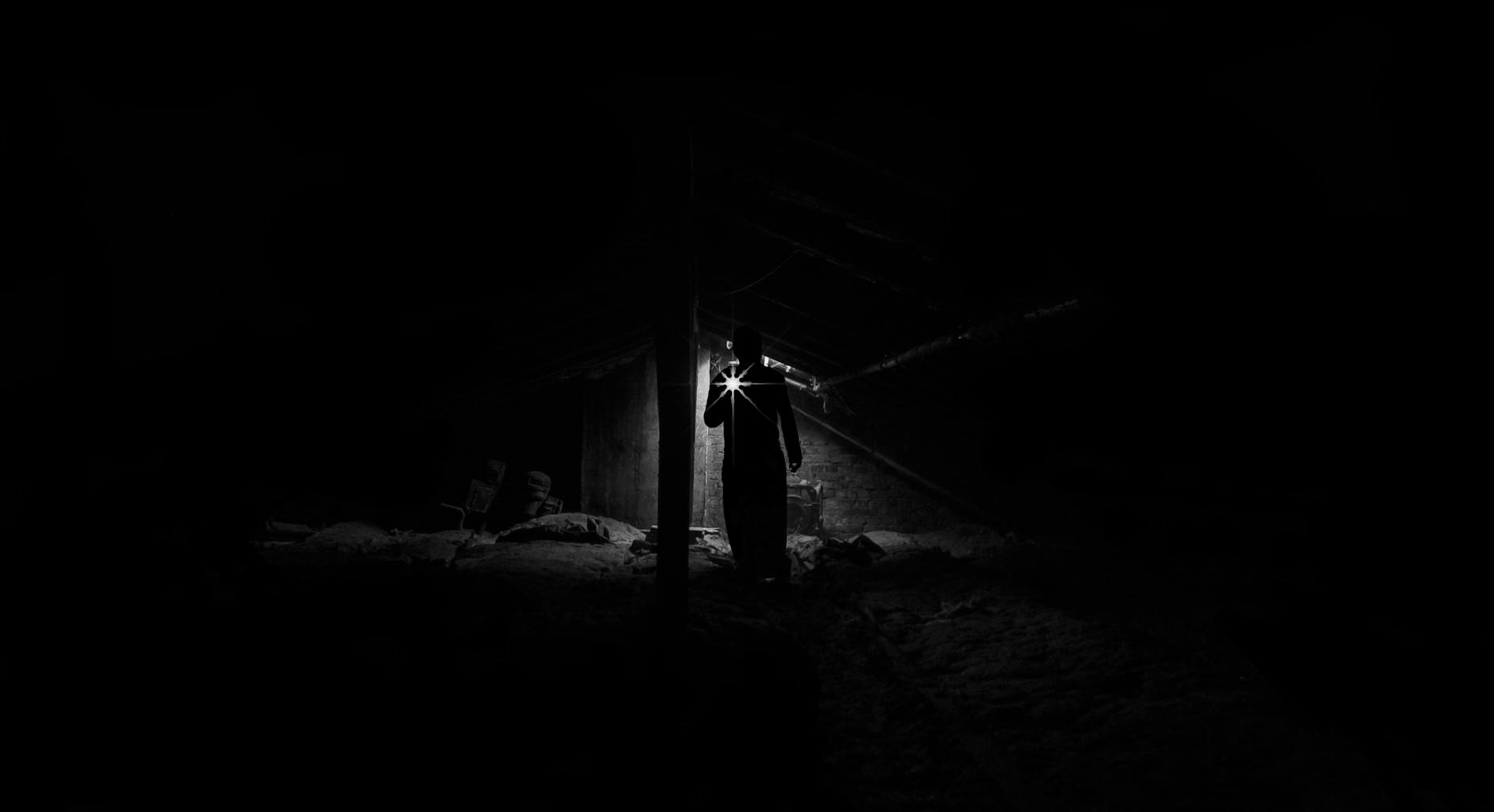
Scary Challenges to Do Alone at Night (If You Dare)
Group horror has a safety net: other people. When something scares you in a group, you laugh nervously and grab the person next to you. The fear diffuses through shared experience.
Solo horror has no safety net. It's just you, the dark, and whatever your brain decides to show you. That's what makes it terrifying — and that's what makes it powerful.
These challenges are designed to be done alone, at night, in your own home. They range from mildly unsettling to genuinely intense. None involve the supernatural. All of them involve the most frightening thing in existence: your own mind.
Before you start: Tell someone you trust what you're doing. Have your phone nearby. And remember — you can stop at any time. The bravery is in starting, not in finishing.
Why Solo Horror Works
Humans are social animals. We evolved to face threats in groups. When you remove the group, you remove the primary coping mechanism your brain relies on for dealing with fear.
Dr. Margee Kerr's research at the University of Pittsburgh found that solo fear experiences activate the amygdala more intensely than group experiences because there's no social buffering. Your brain can't look at someone else's calm face and reassure itself. It has to process the fear entirely on its own.
This makes solo horror challenges uniquely effective for:
- Building self-reliance. You learn that you can handle discomfort without external support.
- Self-discovery. Your reactions in isolation reveal things about yourself that social contexts mask.
- Mindfulness training. Solo challenges force you into absolute present-moment awareness — the opposite of distraction.
The Challenges
Challenge 1: The Mirror
Duration: 5 minutes What you need: A mirror, one candle, a dark bathroom
Instructions:
- Go into your bathroom at night
- Close the door completely
- Light a single candle — this is your only light source
- Sit or stand in front of the mirror
- Look into your own eyes
- Don't look away for five full minutes
What happens: After approximately 60-90 seconds, you'll experience the strange-face illusion. Your facial features will begin to distort. You may see animal features, monstrous faces, or entirely different people looking back at you. This is a documented neurological phenomenon — your visual system is struggling to maintain a coherent image with limited light and sustained attention.
The experience is deeply unsettling even when you know the science behind it. Your logical brain understands what's happening. Your emotional brain does not care.
Intensity: ★★★☆☆
Challenge 2: The Silence
Duration: 15 minutes What you need: Nothing
Instructions:
- Turn off everything that makes noise — TV, music, fans, HVAC if possible
- Turn off all lights
- Sit in the most central room of your home
- Close your eyes
- Listen for 15 minutes without moving or making a sound
What happens: Your home is not silent. It never has been. Within minutes, you'll hear things you've never noticed: the house settling, pipes expanding, electrical hum, wind moving through gaps in windows, and sounds you genuinely cannot identify.
According to research in psychoacoustics, the human auditory system amplifies its sensitivity in quiet environments. In absolute silence, you can hear your own heartbeat, blood flowing through your ears, and even the faint buzz of your nervous system. This is called the threshold shift — and it makes every sound in your home seem amplified and threatening.
Intensity: ★★★★☆
Challenge 3: The Walk
Duration: 10-15 minutes What you need: Your home, no flashlight
Instructions:
- Wait until at least 11 PM
- Turn off every light in your home
- Starting from one end, walk through every room
- In each room, stand in the center for 30 seconds before moving to the next
- No phone flashlight. No nightlights. Navigate entirely by memory and touch.
What happens: You know your home. You've lived in it. But in total darkness, it becomes unfamiliar. Doorways appear in the wrong place. Rooms feel larger or smaller. Objects that you step around unconsciously during the day become obstacles that make you gasp.
The psychological term is place cells — neurons in your hippocampus that create a mental map of your environment. These cells rely heavily on visual input. Remove vision, and your internal map becomes unreliable. Your own home becomes a maze.
Intensity: ★★★☆☆
Challenge 4: The Recording
Duration: 5 minutes of recording, unlimited listening What you need: Voice recorder app on your phone
Instructions:
- At night, place your phone in a room you're not in
- Start recording
- Leave the room and close the door
- Go to a different part of your home for five minutes
- Come back, stop recording, and listen to the full five minutes with headphones
What happens: Your empty room is not empty. The recording will capture sounds you didn't hear because you weren't there: your home's ambient noise, mechanical sounds, settling, and — most disturbingly — sounds that genuinely seem to have no source.
This challenge works because pareidolia — the brain's tendency to find meaningful patterns in random stimuli — applies to audio as well as visual input. Your brain will try to interpret random noise as voices, words, or intentional sounds. Listening through headphones amplifies this effect dramatically.
Intensity: ★★★★☆
Challenge 5: The Letter
Duration: 20-30 minutes What you need: Paper and pen
Instructions:
- Sit alone in a dimly lit room
- Write a letter to yourself from ten years in the future
- The letter must be honest — no optimism bias, no fantasy scenarios
- Write what Future You actually thinks about the life you're living right now
- Don't censor yourself
- When you're done, read it aloud to yourself
What happens: This isn't a horror challenge in the traditional sense. It's a psychological one. Most people find this more terrifying than any mirror game or dark walk, because it forces confrontation with the gap between who you are and who you want to be.
Psychologist Tim Wilson's research on affective forecasting shows that we are remarkably bad at predicting our future emotional states. Writing from your future self's perspective forces you to confront this uncertainty — and the result is often more honest than any journal entry you've ever written.
Intensity: ★★★★★ (psychologically)
Challenge 6: The Countdown
Duration: 10 minutes What you need: A timer
Instructions:
- Lie flat on your bed in complete darkness
- Set a timer for 10 minutes
- Close your eyes (they should be closed even though it's dark — the eyelids create a different kind of darkness)
- Count your heartbeats backward from 500
- If you lose count, start over
- Do not move until the timer goes off
What happens: Forced stillness combined with cardiac awareness creates an intensely meditative — and unsettling — state. You become hyperaware of your own body: every heartbeat, every breath, every micro-twitch in your muscles.
After several minutes, you may experience hypnagogia — the transitional state between wakefulness and sleep. This can produce vivid hallucinations, a sense of falling, the feeling of a presence in the room, or sleep paralysis-like phenomena. All are neurologically normal. All are deeply unsettling when you're alone in the dark.
Intensity: ★★★★☆
Challenge 7: The ScaryChallenges Solo Ritual
Duration: 20-40 minutes What you need: Your phone
Instructions:
- Open The Haunting ritual on ScaryChallenges
- Set the atmosphere: lights off, one light source only (candle or phone screen)
- Draw cards one at a time
- Complete each challenge before drawing the next
- Play on "Terror" intensity if available
Why it works: The Haunting deck is specifically designed for solo play. The cards escalate from self-reflection to genuine psychological dares, and the digital format means you can't peek ahead or skip to easier cards. Unlike the DIY challenges above, The Haunting provides structure and pacing — it knows when to push and when to let you breathe.
Intensity: ★★★★★
Safety Guidelines for Solo Challenges
Solo horror is powerful because there's no social safety net. That makes these guidelines non-optional:
- Tell someone. Text a friend: "I'm doing solo horror challenges tonight, just FYI." Knowing someone knows creates a psychological safety anchor.
- Set time limits. Every challenge has a defined duration. Stick to it. Open-ended fear exploration without time boundaries can shift from recreational to distressing.
- Keep your phone accessible. Not for distraction — for emergency contact.
- Stop if you feel genuine distress. Recreational fear should feel like a roller coaster: intense but controllable. If it feels like a panic attack — racing heart, shortness of breath, overwhelming dread — stop. Turn on the lights. Call someone.
- Skip challenges that trigger you. If you have a specific phobia (darkness, mirrors, silence), skip the related challenge. Therapeutic exposure should be done with a professional, not alone at midnight.
- Debrief afterward. Write down what you experienced. Processing the experience prevents it from lingering as unresolved anxiety.
The American Psychological Association emphasizes that the difference between healthy fear exposure and harmful fear exposure is consent, control, and duration. These challenges satisfy all three — as long as you follow the guidelines.
Who Should Try Solo Horror Challenges
- People who want to test their self-reliance. These challenges prove to yourself that you can handle discomfort alone.
- Horror enthusiasts who've maxed out group games. Solo horror is the advanced course.
- People in a reflective period. Several of these challenges (The Letter, The Silence) double as powerful introspection tools.
- Content creators. Film yourself doing these challenges. The reactions are genuine and compelling.
Who Should Not
- People with diagnosed anxiety disorders or PTSD (without professional guidance)
- Anyone currently in a mental health crisis
- People under the influence of drugs or alcohol
- Minors without parental awareness